
The following provides a reflection of the experience on a therapeutic art therapy group. I wrote this piece in approximately 2020. As I have re-read and re-lived the experience in this story, I am grateful that this is no longer my story.
However, I appreciate that this is the daily experience for many who a living with the experience and within stories of trauma. If this is you, I encourage to pause. I want you to know that you story is not one that needs to be travelled alone.
The following includes thoughts that may be emotionally challenging for some readers.
This piece is a short story on my vast experience of using creativity in my recovery and an area I will be writing more about.
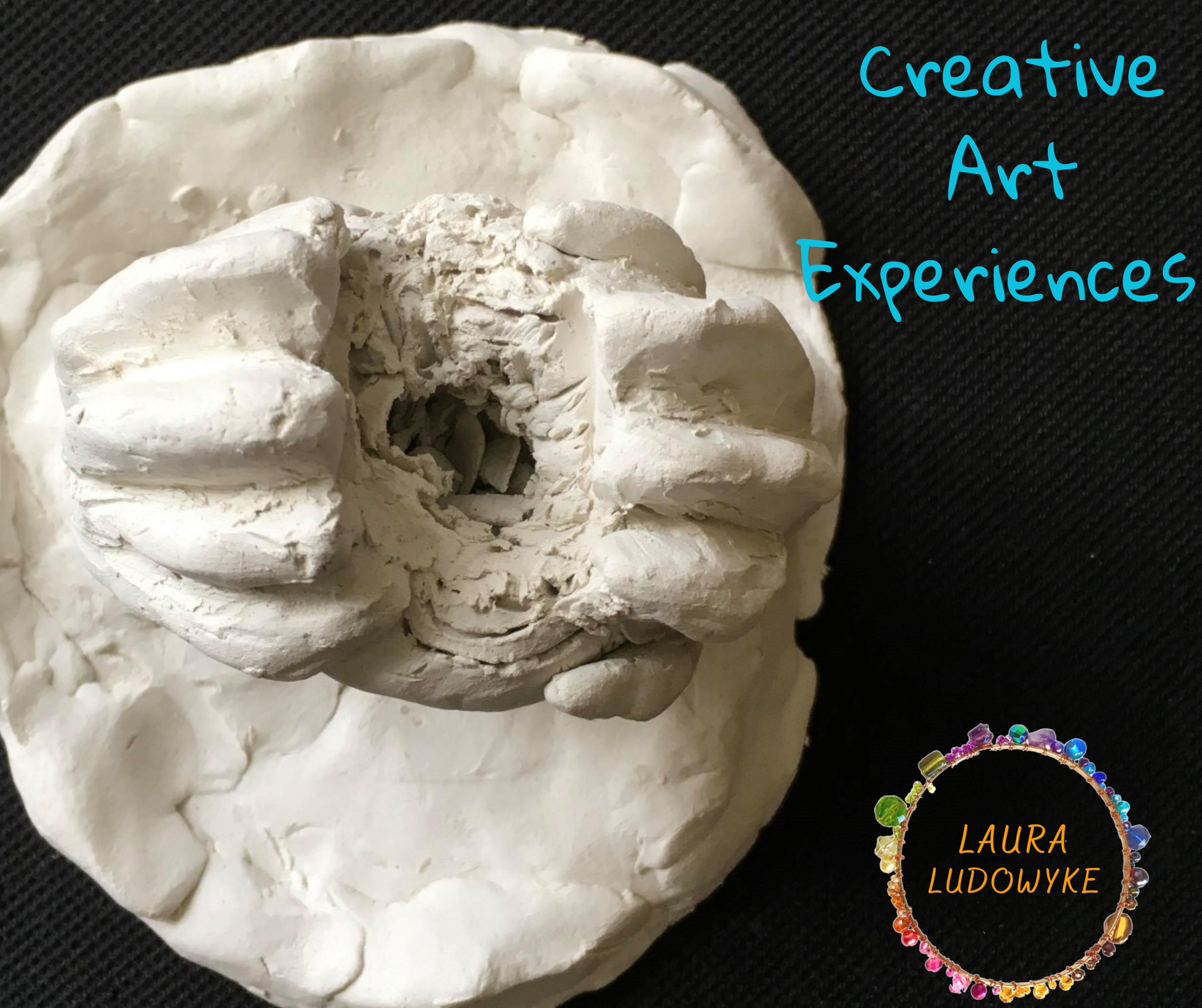
In just 5 minutes, I created this piece. We were asked to make something that represents holding ourselves.
Chronic Feelings of Emptiness:
This was the first time I was able to articulate the emptiness I’ve felt. After 5 years of group therapy, this piece captured the pain and emotions I have been carrying.
What Did It Feel Like to Make?
It was a relief, like making the hole inside me just a bit bigger to let some space reside. The hands in the piece felt just a little bigger to hold the pain. It created space for the pain to move around, instead of pressing against my chest like a crushing weight. This ugly hole, which I couldn’t explain to anyone, even on good days, felt like the unbearable sinking and choking of memories. Each piece of clay represented an event, a rejection.
Using my hands to mold the clay, its coolness and smoothness felt like a small sanctuary. Nothing else existed—no group, no leader—just me and the process. My piece didn’t look like the incredible works of my group members, but we weren’t there to compare. Everyone was so engrossed in their work that time just flowed. No one saw me as unequal. We held a space for everyone to articulate their journey through art, and in this piece, I was holding myself…holding myself.
Holding myself…but I hate myself. How could I hold something I hate? Maybe that self-loathing was starting to move.
There were no words. I didn’t feel pressured to speak, but I wanted to. The piece was a vehicle that allowed me to touch a part of myself I didn’t want touched, seen, or noticed. Something I hid with silence, hollow eyes, and a fake smile—now out there for the world to see. For me to see.
Looking back at this piece, I remember vividly how relieved I was. I even used this piece to explain to someone what BPD feels like, and instead of confusion and horror, they responded with tears and a small, validating smile. “That is so deep,” they said. This same person later found my wolf mask I had created likeable, even though I originally hated it. His perspective shouldn’t matter that much, but my artwork gave me time to think and initiated a conversation I didn’t know how to start. And now, I’ve shared it with you.
Looking back in 2025
Looking back on this piece I can’t help feel emotions stir up in me. I notice how difficult it must have been for me and I appreciate that I have written this piece. Fortuantely this is no longer an experience I am accustomed too.
The use of creative experiences
People with BPD are incredibly creative with their art. I love watching others engage with the art-making process. They go to a place where it’s just them and a new canvas.
Art has provided me with the backbone of acceptance and mindfulness. I’ve been challenged to create with my eyes shut, my left hand, with tea bags, leaves, and sticks.
Creative experiences offers people an opportunity to directly disconnect from difficult and painful thoughts and feelings. When absorbed in creativity, one can forget the real world and exist purely in that moment.
I’ve taken these pieces home to create a therapeutic space where they are no longer just secrets. I’ve used them to create spaces into places of meaning. They can be used as vehicles to help people connect with other people
Art has become a significant part of my narrative and identity. I use it to communicate how I feel through my clothes and the way I dress.
I was my biggest coping strategy to manage feelings of distress. Through art we can change our environments. We can surround ourselves with pieces that transport us to other times in our lives.
Points for Consideration:
For Therapists:
- What personal stories came to mind for you? Are there stories of vulnerability that you too are living with?
- What are the daily creative experiences that you could use to facilitate your own health and wellbeing
- Given this experience occurred in a structured therapeutic day program, how could you create experiences of relational coming alongside.
- How could you use creative experiences in your everyday life without having a structured space. Think about the natural opportunities afforded at the beach, at local parks, even participants own backyards.
- What are some of the limitations of therapeutic art spaces?
People with Lived Experience
- What are the small creative acts that you could do in your day to facilitate a space of love and kindness for yourself?
- Small acts such as braiding your hair, making a bracelet for yourself, picking flowers from the garden can offer many therapeutic benefits.
- Experiences do not need to occur just in a group with a facilitator. You can be your own facilitator.
- Looking back to your childhood are there any creative experiences that you had? What do these experiences mean to you? How you could bring these experiences forwards to your present.
To find out more I encourage you to read the following article I published with my supervisors in 2022.
Leave a Reply