
Please note the following contains themes of suicide and self-harm.
In 2018, I had my first emergency department (ED) experience following an attempted overdose. The experience, while terrifying, left me deeply frustrated and questioning: What is the role of the ED? And what is the role of occupational therapy (OT) in the ED?
Setting the Scene
It was a Monday morning. I woke up from a nightmare, said my goodbyes, with my partner as he left for work. Later, he texted to ask how my day was going. I replied, “Good thanks, I’ve been really productive and I’m just about to have lunch.”
But no one had warned me about the savage mood swings of Borderline Personality Disorder (BPD). A small memory—a photo—triggered me, opening Pandora’s box of fire and fury, where I bury the traumatic events of my life. The next thing I knew, paramedics were at my door.
At Home
I was lying on the floor, crying uncontrollably, hoping for a sleep I’d never wake from. The paramedics stood over me, speaking as though I wasn’t there. I felt exposed and vulnerable. They told me to stand up, but my mind was in chaos, and I couldn’t follow their instructions. They physically picked me up and pushed me into the ambulance.
On the way to the hospital, I overheard them joking about something unrelated. I mentioned that I felt faint, and they placed me on a bed. I could hear them laughing about how sick I looked. I felt like a “crazy person” being carted off to a mental institution.
In the ED
Things only got worse. The first thing I noticed was the overwhelming lights, sounds, and constant commotion. The blood pressure machine squeezed my arm, and the buzzing of machinery filled the air. I didn’t even notice when someone undressed me and placed ECG plugs on my chest.
I was placed in the busiest area of the ED, with the curtains wide open. I felt like a guinea pig on display. I overheard staff discussing patients’ conditions, including mine. Embarrassment consumed me—What did they think of me?
Hours later, I was moved to a bed near the nurses’ station. I could hear conversations about weekend plans and laughter. Paranoia crept in—Were they laughing at me? As I vomited, I heard a nurse laugh with a colleague about it. I realized I wasn’t the only one who had overdosed, as I heard more vomiting and more laughter. My thoughts spiraled: Am I just another girl with BPD creating a scene?
After 12 hours, I begged to go home. The nurse said I couldn’t leave until I saw the psychiatric nurse. I pleaded for an update, but she never returned. I lay there, freezing and drenched in sweat, my mind and body desperate to escape. Eventually, I broke down, screaming and swearing, trying to restrain myself from punching the bed frame.
Barriers in the ED
Reflecting on this experience, I see several barriers that prevent effective care for individuals with complex trauma or BPD in the ED:
- Fear of the unknown and perceived risks.
- Lack of training and unchallenged beliefs about BPD.
- Poor supervision and team communication.
- Workload and caseload pressures.
- Limited specialized skills and emotional regulation among healthcare providers.
- Reluctance to seek help for personal issues.
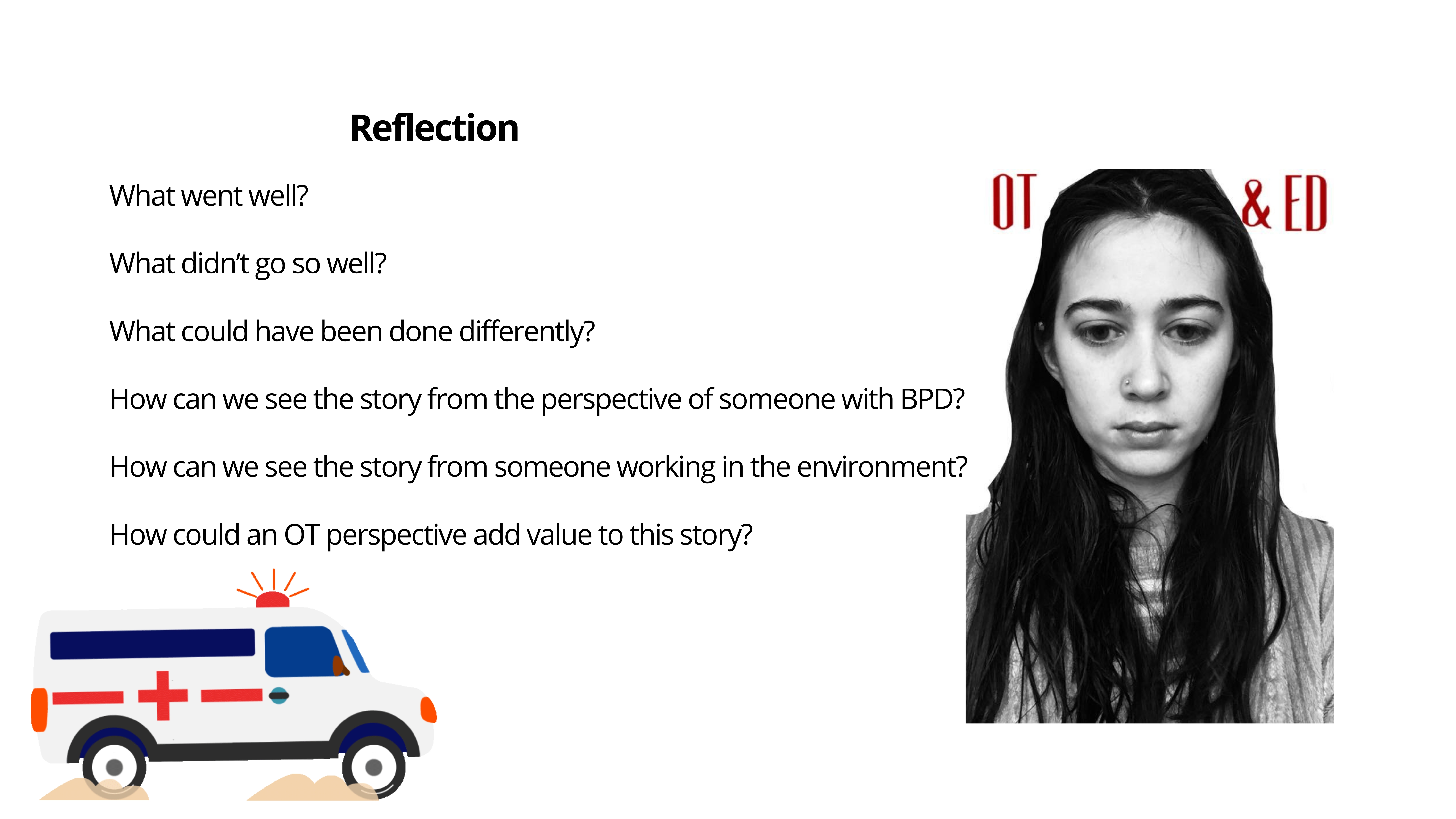
Prompts for Reflection
To improve care, we must create validating environments and consider the impact of our actions:
- Environment Matters: Placing someone who has self-harmed in a busy waiting room—often disheveled, hungry, cold, and tired—can exacerbate their distress.
- Room Design: Bright lights, windowless rooms, and sterile settings can feel interrogative and isolating.
- Choice and Comfort: Allowing clients to choose where they sit and positioning your body to match their comfort level can foster trust.
- Cold Approaches: If a client feels shame and avoids eye contact, how can you position yourself to encourage openness? Can you use objects or gestures to provide comfort?
This experience highlights the urgent need for occupational therapists to reflect on their role in the ED. How can we better support individuals in crisis? How can we challenge systemic barriers and foster environments that validate and empower?
Reflecting
Looking back on my experience in the emergency department (ED) eight years ago, I can now see the challenges faced not just by those in crisis but also by the healthcare professionals working in these high-pressure environments.
For individuals seeking help, the ED can be an overwhelming, isolating, and even retraumatizing space. The sensory overload—the lights, sounds, and lack of privacy—coupled with the vulnerability of being in crisis creates a deep emotional impact.
For healthcare professionals, the demands of the ED are immense. Balancing compassionate, client-centered care with the reality of heavy workloads, high-pressure decision-making, and often limited training in trauma-informed approaches is no easy task. These systemic pressures can affect the quality of care provided and lead to frustration on both sides.
Recognizing these shared challenges is the first step toward fostering meaningful change. By creating validating environments, providing appropriate training, and ensuring better support for staff, we can improve the ED experience for everyone involved. It’s a complex issue, but with small, intentional steps, we can begin to bridge the gap and build a system that prioritizes empathy and understanding.
Let’s start the conversation—how can we work together to make EDs more supportive spaces for both consumers and healthcare professionals?
Other relevant posts:
Thanks for Reading
Leave a Reply